
The Race for Quantity vs. Product Quality in Branded Residences
- Vos Consultants

- Jan 12
- 4 min read
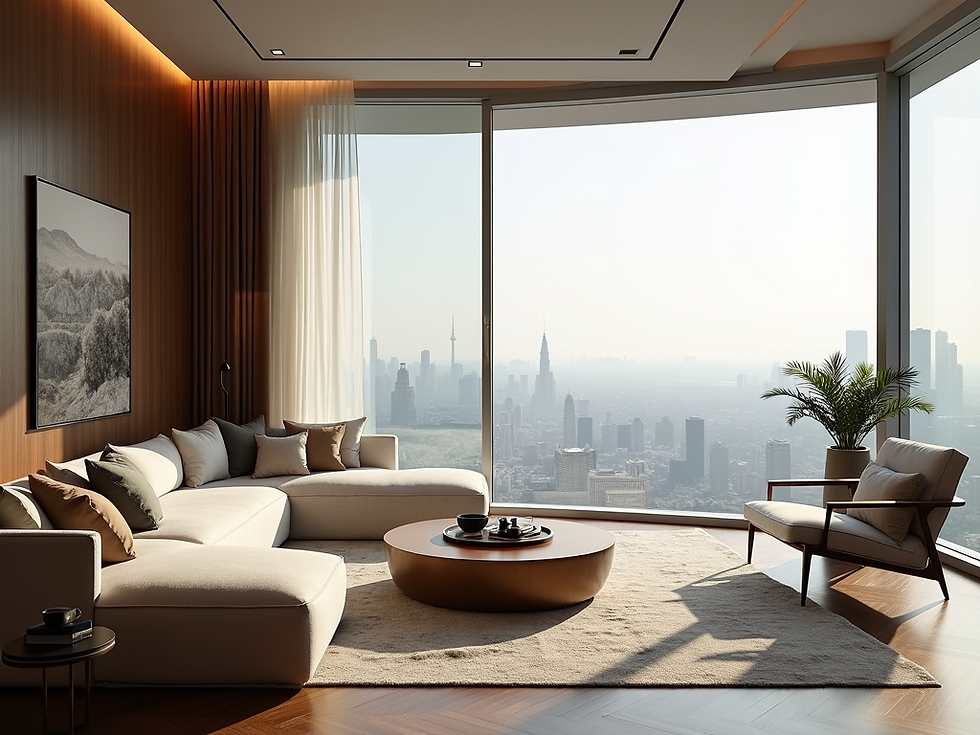
Branded Residences: A Market Caught Between Speed and Substance
The global real estate market is living through a contradiction. Branded Residences are multiplying at an unprecedented pace, yet their original meaning has never been more fragile. What was once a niche defined by exceptional hospitality, refined residential standards, and the careful guardianship of globally respected brands has increasingly become a volume-driven exercise.
Today, the brand name often speaks louder than the experience itself. Logos are elevated, marketing narratives are polished, but the essence the reason Branded Residences once commanded trust, premium value, and loyalty, is frequently missing.
This is not a crisis of supply.It is a crisis of authenticity.
The market is not short of branded developments; it is short of developments that truly deserve the brand they carry.
When Branding Becomes a Shortcut
At its highest expression, a Branded Residence is not a facade, a plaque, or a marketing agreement. It is a philosophy carefully translated into architecture, service culture, operational standards, and daily life.
Yet increasingly, branding is being used as a shortcut to relevance. Instead of earning distinction through design rigor, operational excellence, and customer intimacy, some developments rely on the borrowed equity of a name to compensate for a lack of depth.
The outcome is predictable: A crowded marketplace of projects wearing famous brands but lacking the operational DNA, hospitality mindset, and experiential discipline that originally made those brands desirable.
When branding replaces substance, differentiation disappears.A brand without lived meaning is not positioning, it is decoration.
What Truly Defines Quality?
Quality in Branded Residences is often reduced to visible markers: imported materials, iconic architects, or high-profile partnerships. While these elements matter, they are merely the surface.
True quality begins far earlier, before drawings, before marketing, before sales launches.
It is defined by:
Intent: Why does this residence exist? Who is it truly designed for?
Consistency: Does every interaction, from sales to after-sales, reflect the same promise?
Operational depth: Is there a hospitality infrastructure capable of sustaining service for decades, not just opening day?
Human experience: How does the resident feel not once, but every day?
Quality is not an event or a milestone.It is a continuous discipline.
The Developer’s Responsibility: Day One or Never
One of the most dangerous misconceptions in Branded Residences is the belief that quality can be corrected later. It cannot.
Quality is either embedded from the first decision or it never truly exists.
From inception, developers must confront fundamental questions:
Who introduces the product, and with what credibility?
What story is being told, and does it align with reality?
Is the buyer journey a transaction, or a transformation?
A Branded Residence should not be “sold.” It should be revealed. The introduction must feel like an initiation into a lifestyle, where clients are guided, step by step, through the values, benefits, and emotional resonance of belonging to a branded community.
This is not about ownership.It is about identity and belonging.
A brand is not something a developer acquires; it is something they must uphold.
To carry a brand means embracing its standards, protecting its reputation, and delivering its promise long after the sales gallery closes.
This responsibility includes:
Upholding the brand’s service philosophy
Translating brand values into daily operations
Ensuring consistency across people, processes, and spaces
Without a strong hospitality backbone, many branded developments struggle to sustain the experience they advertise. Over time, concierge desks become symbolic, amenities lose relevance, and service shifts from anticipatory to reactive.
Residents may forgive imperfections but they never forget broken promises.
The Hidden Cost of Market Saturation
The consequences of oversaturating the market with weakly executed Branded Residences are rarely immediate. They unfold slowly and often irreversibly.
The long-term costs include:
Erosion of brand credibility
Declining resale and rental premiums
Inconsistent service standards
Communities lacking identity or emotional connection
Assets that age prematurely, both physically and conceptually
Legacy cannot be manufactured at launch.It is earned through years of consistent delivery.
The most successful Branded Residences share a defining characteristic: they were conceived as long-term ecosystems, not short-term commercial products.
They invest in:
Personalised services that evolve with residents’ lives
Facilities designed for daily use, not marketing imagery
Communities curated with intention, not density
Buyer journeys that are thoughtful, informed, and deeply personal
These projects resist the temptation of scale for scale’s sake. Instead, they prioritize durability, relevance, and emotional connection.
They do not chase volume.They protect value.
The Way Forward: Fewer, Better, Deeper
The future of Branded Residences will not belong to those who build the most. It will belong to those who build with restraint, clarity, and respect for the brands they represent.
The next chapter belongs to developers who understand that:
A brand is a lived experience, not a marketing asset
Quality is cultural, not cosmetic
Exclusivity is earned through care, not scarcity
Legacy is the most valuable return on investment
Ultimately, the defining question is not how many Branded Residences can be created.
It is which ones will still matter, when the logos fade, the market matures, and only true quality remains.
In a market saturated with names, the first true test of a Branded Residence is not the building, it is the introduction. How a brand and product are presented defines not only perception, but expectation, trust, and long-term value. This moment cannot be delegated to scripts or sales techniques. It demands a highly trained team capable of articulating vision, values, and experience with credibility and restraint.
Great teams do not sell square meters or investment yields. They translate philosophy into feeling. They guide clients through a curated journey that reveals what it truly means to live within a branded ecosystem, where service, design, and culture converge into a way of life. These professionals are not salespeople; they are ambassadors, custodians of the brand’s promise and protectors of its legacy.
Because when the product is introduced with integrity, knowledge, and emotional intelligence, quantity loses its appeal and quality becomes unmistakable. Dayiana Oballos
Written by Dayiana Oballos / VOS Consultants


