Millions in Marketing, Zero Structure: Welcome to Your ROI Problem, Branded Residences
- Kevin Wash

- May 1
- 5 min read
Updated: 2 days ago
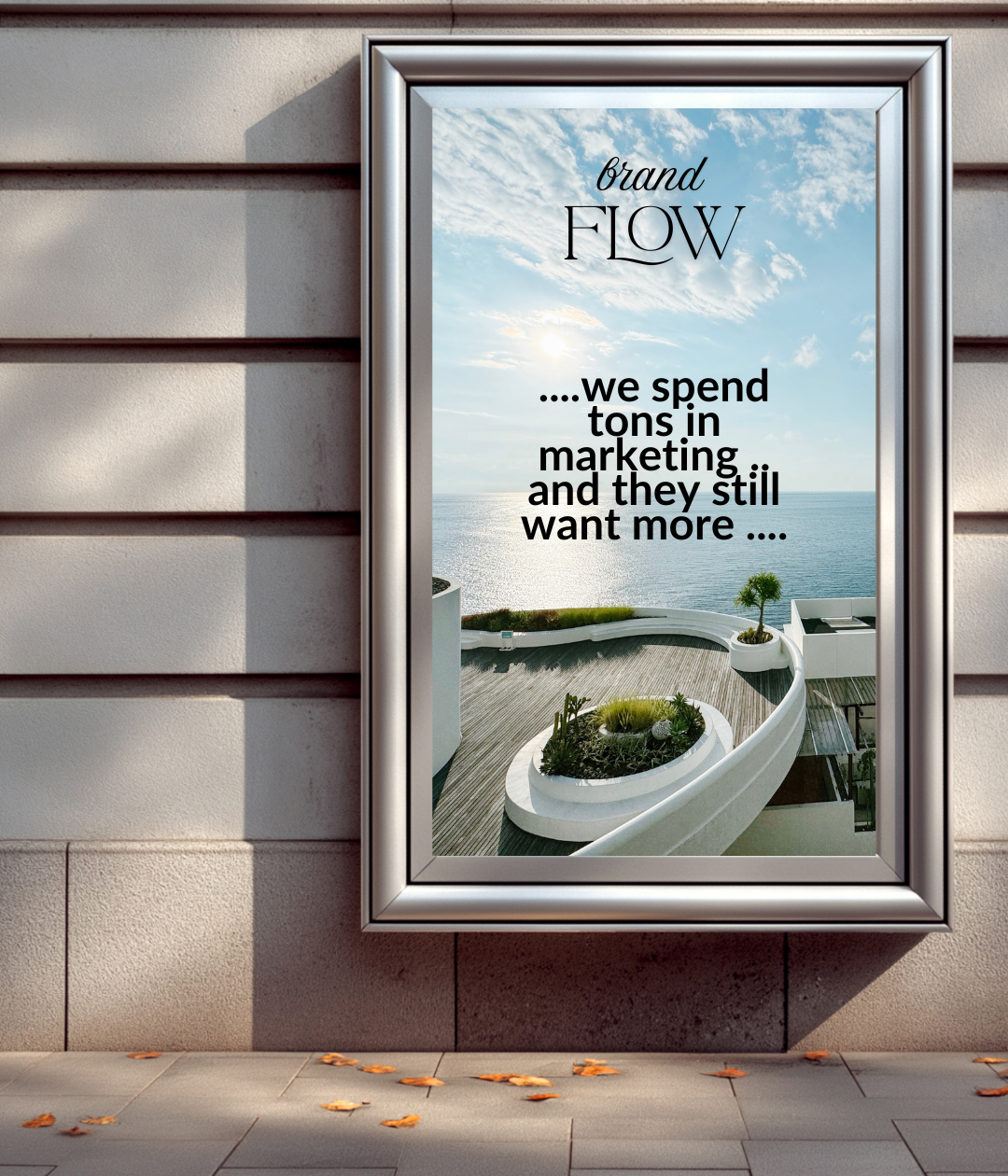
“If your team ‘hopes’ to follow up, your ROI is already leaking.” Kevin Wash
The launch was a success. The room was full, the energy was right, the brand did its job. People showed up, engaged, asked questions, took brochures, smiled, nodded.
For a brief window, it felt like everything was working exactly as planned.
And then… things slowed down.
Not dramatically at first. Just enough to feel slightly uncomfortable. Fewer calls. Slower responses. The pipeline that looked so promising suddenly feels… thinner. Weeks pass, and that early momentum starts to look more like a memory than a trajectory.
At some point, the question appears, usually in a meeting, sometimes just in your own head:
“Is the market slowing down?”
It’s a fair question. It’s also, most of the time, the wrong one.
Because what’s happening in most projects today isn’t a demand issue. Demand is there. Interest is there. In many cases, you’ve already paid for it—through branding, marketing, PR, events, partnerships.
The real issue is much less comfortable to confront.
The issue is what happens after the lead comes in.
Somewhere between the first inquiry and the final decision, things start slipping through the cracks. Not in a dramatic, visible way, nothing that triggers alarms, but quietly, consistently, expensively.
An email that gets answered two days later instead of two hours.
A call that was meant to happen but didn’t. A follow-up that “we’ll do tomorrow” and somehow never happens.
A client who asked a very specific question… and never got a precise answer.
Individually, these moments seem small. Collectively, they are devastating.
Because every one of them represents intent. And intent, when not handled properly, doesn’t wait, it moves on.
What makes this more critical today is the type of buyer you’re dealing with. The market has evolved. Clients are sharper, more analytical, more demanding. They compare, they question, they take their time. They don’t get carried away by a beautiful launch event the way they used to. That emotional spike still matters—but it no longer closes the deal.
"A sold-out launch event means nothing if your pipeline is empty 30 days later.” Kevin Wash
Today, the sale happens in the days and weeks that follow. In the conversations. In the precision of the answers. In the consistency of the follow-up.
In other words, in the system.
And this is where things start to break.
Because many developments are still operating with an unspoken assumption: that a strong brand and a good product, supported by a capable sales team, will naturally convert.
It used to be enough. It isn’t anymore.
Brand today does what it’s supposed to do, it creates visibility, attracts attention, opens the door. But once that door is open, the responsibility shifts entirely to the sales process. And if that process is not structured, disciplined, and actively managed, the door doesn’t just stay open… people walk back out.
There’s a quiet irony here. Developers are willing to invest heavily in brand partnerships, fees that are justified by the promise of higher pricing, faster velocity, stronger positioning. And yet, in many cases, the actual execution of sales is left to teams that are not trained, not structured, and not operating within any consistent framework.
It’s a bit like installing a high-performance engine in a car… and then handing the keys to someone who’s never driven on a highway.
The cost of this mismatch is rarely measured properly.
You’ll see it partially, in slower absorption rates, in extended sales cycles, in the growing pressure to adjust pricing or increase incentives. But the real cost sits beneath the surface.
Leads generated but never converted.Marketing budgets that worked, but didn’t pay back.Time spent without clear outcomes.Decisions made without full visibility of what’s actually happening in the pipeline.
And then there’s the intangible cost: stress.
Because when sales don’t move as expected, everything tightens. Timelines, cash flow, expectations. The project doesn’t change, but the pressure around it does.
What’s often needed at that point is not more marketing, and certainly not more noise.
It’s structure.
A Commercial Architecture is not about adding complexity or slowing things down. Quite the opposite, it’s about bringing clarity and control to a process that, in many projects, is still surprisingly improvised.
It means knowing exactly where every lead stands, what has been said, what needs to happen next, and when. It means removing the randomness from follow-ups, the guesswork from communication, the inconsistency from client experience.
It also means elevating the role of the sales team.
Because the reality is, today’s buyer doesn’t need a salesperson, they need an advisor. Someone who understands not just the product, but the logic behind the investment. Someone who can answer intelligently, guide confidently, and adapt to different levels of sophistication.
This is where Sales Excellence comes in. Not as a slogan, but as a capability.
It’s the difference between a team that “handles inquiries” and a team that actively manages a pipeline. Between reacting to clients and strategically guiding them. Between hoping deals will close and knowing why they will.
And yes, it requires training. It requires discipline. It requires a shift in mindset—from selling units to managing a business process.
But the return on that shift is significant.
Because when structure is in place, something interesting happens.
Leads stop leaking.
Time becomes measurable.
Conversations become sharper.
Decisions become easier.
And suddenly, the same level of demand starts producing very different results.
So before questioning the market, it’s worth asking a more uncomfortable, but far more useful—question:
What is actually happening inside your sales process right now?
Not what should be happening. Not what the team believes is happening. But what is actually happening, day to day, lead by lead, conversation by conversation.
Because in this market, the projects that succeed are not necessarily the ones with the biggest names or the loudest launches.
They’re the ones that understand a simple truth:
ROI is not created at the moment of attention. It’s created in the discipline that follows it. #BrandedResidences
Written by Kevin Wash
Founder & Commercial Architecture Advisor / VOS Consultants
About the Author: Kevin Wash is the Founder of VOS Consultants and a specialist in Commercial Architecture for Branded Residences and Mixed-Use Developments. Drawing on decades of international experience across hospitality, luxury residential and commercial strategy, he advises developers and hospitality brands on aligning commercial positioning, buyer journey, sales execution and operational readiness to improve long-term project performance.
Further Reading:


Comments