Are Luxury Hospitality Brands Losing Control on Brand Immersion? Branded Residences
- Dayiana Oballos

- Apr 29
- 4 min read
Updated: 7 days ago
VOS Executive Brief™
Edition 018
Luxury hospitality brands have spent decades building something fragile yet powerful: Trust.
Not just trust in the product, but trust in the promise. The promise that from the first interaction to the final handover, a client is not simply buying real estate, they are entering a philosophy.
A way of living. A world carefully constructed around service, emotion, and identity.
But somewhere along the rapid expansion of Branded Residences, that promise is beginning to fracture.
And the data is difficult to ignore.
In our recent mystery shopping exercise conducted across 8 out of the 10 leading luxury hospitality brands in the branded residences segment, we evaluated the initial part of the buyers journey, from first contact, response time, narrative control, broker interaction, presentation quality, all the way to sales engagement.
The benchmark was 100 points, built around a structured brand immersion and client experience framework.
The average score?
5 out of 100.
Not 50. Five.
This is not a minor operational inefficiency.
This is a systemic breakdown in developer responsibilty & brand storytelling at the very moment where branded residences are reaching their peak demand, visibility, and valuation power.
The illusion of luxury ends where the journey begins
Luxury brands often believe their reputation is carried by architecture, interior design, location, or hotel affiliation.
Developers are led to believe the Brand name alone will generate sales for them.
But in branded residences, the real product is not the building.
It is the experience of desire formation.
And that experience begins long before a showroom visit, it begins at first contact.
What we consistently observed is troubling:
50% of Projects contacted, no response at all.
First responses that feel transactional, not curated
Inconsistent messaging between brand teams and master brokers
Lack of narrative continuity about lifestyle, philosophy, and long-term value
Incredibly poor presentations that fail to translate brand identity
Weak or absent follow-up processes
Multiple real estate listings sent from Brokers.
And critically, no controlled immersion into the brand universe
When this happens, the brand stops being a luxury experience and becomes a real estate listing with a logo attached.
That is not branding. That is dilution.
The Broken Middle: Where brands lose themselves
One of the most damaging gaps sits between brand intention and market execution.
Master brokers and smaller intermediary agencies, often untrained in brand immersion, are tasked with communicating projects that were designed to be emotional, exclusive, aspirational, and experiential.
Instead, they reduce them to:
Price per square meter
Information overload or the absolute opposite
ROI projections
Unit availability
Generic location selling points
Real Esate listings
The consequence is subtle but devastating: the lifestyle narrative disappears.
And when the narrative disappears, so does exclusivity.
What should have been a carefully orchestrated journey into a brand universe becomes just another property pitch in a crowded inbox.
Luxury is not built at handover, it is built at first contact
There is a dangerous misconception in the market that brand reputation is “protected” by operations after purchase, the hotel service, the residence management, the amenities.
But in reality, perception is formed far earlier.
A misleading first response, a delayed follow-up, a lack of emotional framing, or a poorly delivered presentation does not just risk losing a lead.
It actively damages:
Brand equity
Perceived exclusivity
Buyer trust
And long-term loyalty before it even begins
Developer Profits
Luxury does not forgive inconsistency. Especially not at entry point.
A case study: When control of narrative changed everything
One of the clearest examples of this breakdown, and its solution, comes from a Branded Residence project in Egypt where VOS Consultants was engaged during a critical sales phase.
The project was initially positioned through a master broker network. On paper, everything appeared correct: global brand affiliation, strong product, attractive location, and competitive pricing structure.
Yet performance told a different story.
Lead quality was inconsistent. Conversion was weak. Buyer engagement lacked emotional depth. The narrative was fragmented.
The issue was not the product.
It was the journey.
Buyers were not being immersed into the brand world. They were being processed through a transactional real estate funnel.
VOS Consultants stepped in with a fundamental repositioning of the buyer journey:
Transition from indirect master broker messaging to controlled direct sales narrative
Rebuild of first-contact communication to reflect brand philosophy, not property specs
Structured storytelling approach aligned with hospitality DNA
Training alignment for client-facing teams on immersion language and tone
Introduction of a curated emotional progression from inquiry to engagement
The result was immediate and measurable: not just improved lead conversion, but a complete shift in buyer perception. The project stopped being “a development with a brand attached” and became a brand experience expressed through real estate.
That distinction is everything.
A quiet crisis the industry is avoiding
We reached out to several luxury hospitality brands to raise this concern, not as criticism, but as a strategic warning.
Only one responded.
That silence is perhaps more revealing than any data point.
Because the issue is not unknown. It is documented, discussed privately, and increasingly criticized across the sector.
Yet processes remain unchanged. Fragmentation remains accepted. Control of narrative remains delegated.
And in doing so, brands are slowly eroding the very asset they are trying to scale: emotional authority.
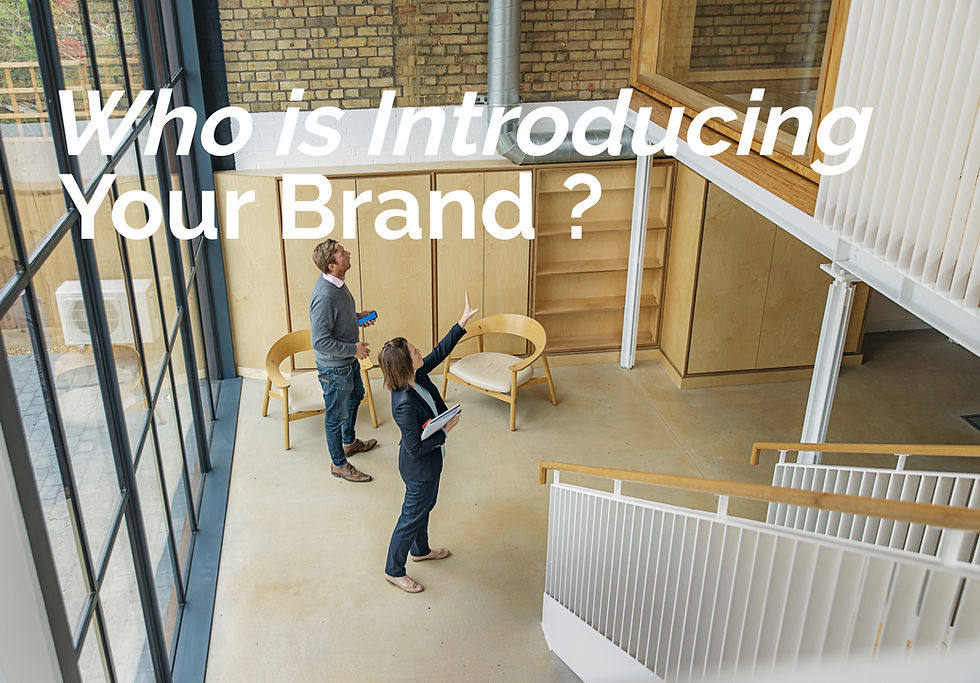
The real question, Who is introducing your Brand ?
Branded residences have a distribution problem. Channels are not clearly trained and the brand immersion is a problem.
And immersion cannot be delegated without design. It cannot be outsourced without control. It cannot be improvised without consequence.
Luxury hospitality brands built their power on detail, consistency, and emotional precision.
If those principles are lost at the very first interaction, then everything that follows is already compromised.
The question is not whether branded residences will continue to grow.
They will.
The question is whether luxury hospitality brands are willing to protect what makes them luxury in the first place, before the market reduces them to something far more ordinary than they ever intended to be.
Written by Dayiana Oballos / VOS Consultants
Co - Founder & Commercial Architecture Advisor / VOS Consultants
About the Author : Dayiana Oballos is Co-Founder and Commercial Architecture Advisor at VOS Consultants. With more than 25 years of international experience across luxury hospitality, branded residences and mixed-use developments, she advises developers on aligning commercial strategy, buyer experience and operational delivery to improve long-term project performance.
Further reading:


Comments